Balkan hotel pipeline analysis matters only when operating hotels are separated from active construction, signed projects, planning-stage schemes and opening dates that need fresh confirmation. As of 31 August 2026, Hyatt Regency Zadar, The Isolano Cres, Mövenpick Kvarner Bay and Mövenpick Teuta Kotor Bay provide operating-market signals; InterContinental Belgrade has visible construction progress and a stated end-2026 target; Holiday Inn Novi Pazar has a much longer 2029 horizon; Hilton’s Bosnia projects carry different delivery risks; and IHG’s current pages give conflicting signals on Crowne Plaza Budva. For suppliers, the practical question is therefore when to engage, with whom and what to verify before spending sales resources—not whether a hotel name appears in a press release.
Four markets combine different demand profiles and project structures
The available national indicators establish meaningful hotel demand across Serbia, Croatia and Montenegro, but they do not support a single regional pipeline total or a direct ranking of individual projects. The indicators also measure different periods and aspects of tourism performance, so they should be used to understand market context rather than aggregated into a regional total or treated as proof of demand for any named hotel.
Serbia recorded 1.715 million tourist arrivals and 4.844 million overnight stays during January–May 2026, according to the Statistical Office of the Republic of Serbia. Arrivals were 7.9% higher and overnight stays 5.7% higher than in the corresponding period a year earlier. The figures support the broader demand context for hospitality investment, but they neither demonstrate demand for a particular Belgrade hotel nor guarantee that a stated opening date will be met.
Croatia’s commercial-accommodation room-and-suite occupancy averaged 59.9% in 2025, compared with 58.9% in 2024, according to the Croatian Bureau of Statistics. This is the clearest operating-market benchmark among the evidence reviewed, although an annual national average necessarily combines properties, destinations and seasons with materially different performance.
Montenegro recorded 15.37 million tourist overnight stays in 2025. The Statistical Office of Montenegro reported that Serbia generated 23.4% of foreign-tourist overnight stays, Russia 16.4% and Bosnia and Herzegovina 8.1%. That composition is commercially relevant for coastal and mountain hotels because their demand may be exposed to the accessibility and performance of a relatively concentrated group of source markets. It does not, by itself, establish the feasibility of Crowne Plaza Budva or delivery of a Kolašin development.
| Asset | Verified status | Current signal | Supplier decision |
|---|---|---|---|
| InterContinental Belgrade | Under construction | 22 floors / 95m structure; end-2026 target | Map Delta/IHG roles now; do not assume packages are open |
| Holiday Inn Novi Pazar | Long-horizon project | €24m+ investment, 138 rooms; works planned from Sep 2026; opening target 1 Oct 2029 | Monitor milestones before committing bid resources |
| Hyatt Zadar / Isolano Cres | Operating | Official hotel pages and live inventory | Qualify current operating needs |
| Mövenpick Kvarner Bay | Operating, phased commissioning | Bookable; some facilities still phased, spa planned winter 2026 | Separate current supply from later commissioning |
| Hilton Mostar / Sarajevo | Signed, not operating | Mostar target moved to summer 2027; Sarajevo administrative uncertainty remains | Monitor Mostar; keep Sarajevo at lower confidence |
| Crowne Plaza Budva | Reverification required | Current IHG pages give conflicting opening signals | Verify directly before treating as an operating account |
| Mövenpick Teuta Kotor Bay | Operating | Current Accor page shows rates, rooms, services and hotel contacts | Qualify recurring operating procurement |
| Kupari / Ičići / Kolašin | Planning/development evidence | Public project records do not prove procurement readiness | Require current permit, construction and contracting evidence |
The commercial distinction is therefore not simply between larger and smaller tourism markets. It is between urban mixed-use, operating coastal resort, permit-led redevelopment, franchise-entry and mountain-development models. Each can produce a different timetable for foodservice systems, kitchen equipment, fit-out, meetings infrastructure, wellness facilities, technology and recurring hotel supplies. Public project visibility does not establish that any corresponding purchasing package is open.
Branded Hotel Pipeline Serbia centres on a visible mixed-use project
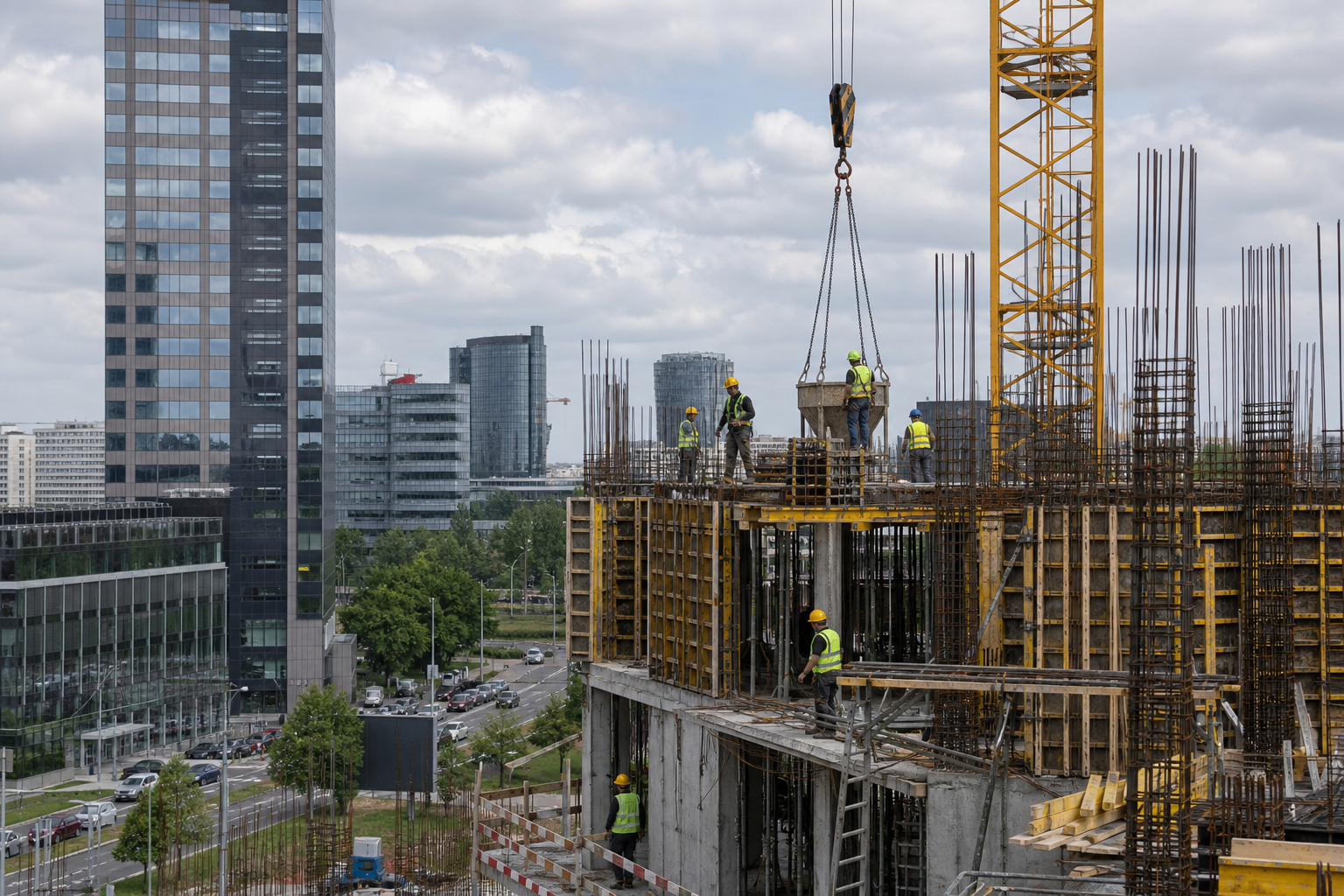
Serbia’s strongest evidenced development is Delta District in New Belgrade. Delta Holding described the project as a 100,000-square-metre, single-phase mixed-use development under construction, incorporating an InterContinental hotel. Its corporate project update reported a target of opening the hotel by the end of 2026 and documented an IHG Hotels & Resorts delegation visit to the Delta District construction site.
This is materially stronger evidence than a brand-signing announcement alone. There is a named developer group, an identifiable site, reported physical construction and a brand-side institutional trail. Published reporting also provides a public-support and investment benchmark: SeeNews reported a €17 million subsidy agreement and cited a required initial hotel investment of €85.4 million.
The subsidy reporting is relevant because it adds public-policy and capital-commitment evidence to the project record. It does not establish construction completion, operational readiness or the timing of individual purchasing packages. The end-2026 date remains a stated target until an opening announcement, live operating evidence or equivalent current confirmation establishes delivery.
For suppliers and professional advisers, the appropriate action is capability-led relationship mapping around Delta Real Estate, Delta Hospitality and IHG Hotels & Resorts. That can begin with identifying which party is relevant to development, hotel operations, technical standards or brand compliance. The reviewed sources do not disclose final management-agreement terms, package-level procurement responsibility, approved supplier lists, open tenders or procurement contacts. No company should represent the project as accessible business merely because the participants and construction site are public.
The mixed-use structure matters. A hotel embedded in a 100,000-square-metre district is not commercially equivalent to a stand-alone accommodation project. Interfaces may exist with other parts of the development, but the supplied evidence does not identify package boundaries or decision rights. Food and beverage vendors, kitchen-equipment companies, construction contractors, fit-out specialists and operating suppliers should therefore avoid assuming that one project-level relationship controls every category.
The immediate decision is to map responsibilities without treating the stated target as forecast certainty. Construction evidence makes Delta District more actionable than an agreement-only project, while the absence of procurement records and final operating details prevents it from being classified as an open sales opportunity. Current construction milestones, corporate timetable updates and eventual operating evidence should determine any later upgrade.
Holiday Inn Novi Pazar adds a separate 2029 supplier horizon
Serbia’s hotel opportunity set is not limited to the near-term Belgrade construction cycle. The Serbian Ministry of Tourism and Youth states that Holiday Inn Novi Pazar represents an investment of more than €24 million, with 138 rooms and conference facilities. Works were scheduled to begin in September 2026 and the published opening target is 1 October 2029. That makes the project commercially relevant for long-lead equipment, fit-out and hospitality supply mapping, but too distant to treat as immediate procurement without later milestones.
For suppliers, the right trigger is not the announcement itself. Useful upgrade signals would include verified construction progress, named contractors or package owners, procurement notices and confirmation of who controls category specifications. Until then, Novi Pazar belongs in a monitored medium-term portfolio rather than a near-term sales forecast.
Croatia provides the clearest operating-to-planning spectrum
Croatia offers the most useful proof-to-pipeline comparison in the reviewed evidence. It includes two operating international-brand hotels, a developer-documented Ičići development and a major Dubrovnik-area scheme whose official documentation evidences planning progression rather than construction. That range demonstrates why a brand name alone is not a sufficient project-status label.
Hyatt Regency Zadar is an operating reference property
Hyatt reported that Hyatt Regency Zadar opened on 15 May 2025. It is Hyatt’s first branded hotel in Croatia and is owned by Doğuş Croatia. The relevant status is therefore operating, not pipeline.
That distinction changes the commercial question. A company considering the property is no longer evaluating whether a development will reach completion; it is assessing whether its offer fits an existing hotel’s operating requirements and whether there is a documented route to the relevant owner, hotel or brand function. The public evidence confirms opening and ownership, but it does not identify tenders, purchasing calendars, category managers or approved vendors.
Mövenpick Kvarner Bay combines operations with staggered commissioning
Accor’s official hotel listing confirms that Mövenpick Hotel & Residences Kvarner Bay is operating in Novi Vinodolski. The property lists 13 meeting rooms, while its wellness and spa facilities were scheduled for winter 2026.
This creates two commercial statuses within one asset. The hotel and meetings operation provides current-account relevance, particularly for recurring hospitality and conference-related supply. The wellness and spa timetable remains a commissioning target rather than proof that every planned facility is operational. Vendors should verify the current amenity set before presenting products tied to the later phase.
Kvarner Bay is consequently the clearest priority in the dossier for post-opening operating-supply assessment. Its meetings infrastructure also distinguishes it from a resort proposition defined only by rooms and leisure demand. Even here, operating status is not evidence of an open supplier opportunity: Accor’s listing establishes the property and disclosed facilities, but it does not reveal procurement access or decision rights.
Ičići remains a developer-evidence case
DDG Group’s published project portfolio provides a developer evidence trail for its Ičići development, which is presented in the supplied project information as Marriott-related. The reviewed material establishes a named developer disclosure, but it does not provide enough independently verified current information to classify all components as operating or to confirm a package-level procurement stage.
The appropriate response is not to ignore the project, but to treat DDG Group as the initial relationship-mapping and verification point. Before committing bid-development resources, companies should obtain current planning and building-permit records, the relevant project-company registry extract, a current construction milestone and confirmation of which entity controls the category in question. Any unit count, project value or timeline originating from developer material should remain expressly attributed until corroborated through current institutional records.
Kupari has planning progression, not construction proof
The Kupari tourist-zone documentation describes five stages, including Four Seasons Hotel Dubrovnik, residences, a grand centre and beach phases. The Croatian environmental and planning documentation for the Kupari tourist zone is important institutional evidence of project definition and regulatory progression.
It is not evidence that Four Seasons Kupari is under construction. Environmental, location-permit or related planning documents establish that a proposal has entered defined administrative processes; they do not prove financing completion, contractor mobilisation, vertical construction, brand opening or purchasing readiness.
Kupari therefore carries materially higher delivery uncertainty than Hyatt Regency Zadar or Mövenpick Kvarner Bay. It may justify periodic monitoring because the scheme is substantial and institutionally documented, but companies should not treat it as forecastable revenue without current permit, registry, financing and construction checks appropriate to their prospective role.
Bosnia and Herzegovina’s Hilton signings require a reset of the 2026 assumption
Hilton announced franchise agreements with Intersped Sarajevo for Hotel Neretva Mostar, Tapestry Collection by Hilton, and Hampton by Hilton Sarajevo City Centre. The original Hilton announcement targeted 2026 openings and presented the two agreements as Hilton’s intended entry into Bosnia and Herzegovina.
The word franchise is commercially significant. It identifies the disclosed brand-entry model and Intersped Sarajevo as the franchise counterparty, but it does not mean Hilton owns the hotels, finances construction or controls every purchasing decision. The reviewed sources do not disclose the complete allocation of procurement authority, management responsibilities or pre-opening services.
More importantly, signed franchise agreements are not opening certificates. Subsequent reporting in April 2026 said that Hotel Neretva Mostar was expected in summer 2027 while the Sarajevo project still faced administrative issues. This reporting does not provide a final delivery guarantee, but it is a clear reason not to continue using the original 2026 target as the base sales assumption.
The Bosnia and Herzegovina cases should be held in a signed-but-not-operating category until stronger evidence appears. Useful next signals include current corporate opening statements, live official booking inventory, local permit records, registry updates, construction evidence and a formal opening announcement. The supplied evidence does not confirm project room counts or operating status, so neither should be inserted into revenue models as an established fact.
Companies assessing local corporate, tax or administrative structures can use BalkansNetwork’s Bosnia and Herzegovina market-entry guide for background on navigation across the Federation of Bosnia and Herzegovina, Republika Srpska and Brčko District systems. That background does not replace project-specific checks with the responsible municipal, cantonal, entity and registry authorities.
The decision implication is narrower than the brand announcement might suggest. Hilton and Intersped Sarajevo are documented relationship-mapping points, but the evidence does not show an active operating account, an open tender or a purchasing calendar. Monitoring should continue, while sales forecasts should reflect the revised Mostar reporting and unresolved Sarajevo administration rather than the original signing timetable.
Montenegro combines a passed coastal target with mountain delivery risk
IHG Hotels & Resorts announced the signing of an 81-room Crowne Plaza Budva with Uniprom Hoteli and stated a Q1 2026 opening target. The IHG corporate release is credible evidence of the brand agreement, intended room count, named partner and original timetable.
It is not current proof that the hotel opened. Because Q1 2026 has passed, the project should be marked reverification required, not automatically moved into the operating category. Appropriate confirmation could include a live official hotel page with bookable inventory, an opening release, current registry and classification records, or confirmation from the named parties. Without that evidence, companies risk treating an announced account as an active property.
The Kolašin case has a different market proposition and evidence profile. Mereha Developments presents a mountain development with a developer-stated Q4 2026 completion target on its Kolašin project page. That is useful for identifying the developer and its stated schedule, but it remains a developer disclosure. The reviewed evidence does not establish completion, operating status, final procurement control or an open tender.
Montenegro’s demand composition adds another layer of commercial risk. Serbia, Russia and Bosnia and Herzegovina together accounted for substantial shares of reported foreign-tourist overnight stays in 2025. This does not invalidate coastal or mountain projects, but it means that plans exposed to leisure demand should be stress-tested against source-market access and performance rather than relying only on Montenegro’s total annual night count.
Budva and Kolašin should therefore remain monitoring and verification cases. Uniprom Hoteli, IHG Hotels & Resorts and Mereha Developments are documented relationship-mapping points for their respective projects. Their presence in public evidence does not imply procurement access, endorsement or permission to market an unverified opening date.
Operator and ownership models determine the correct counterparty
The evidenced pipeline is as much an operating-model story as a construction story. A brand name on an announcement does not reveal who owns the asset, employs the operating team, procures food and beverage inputs, specifies equipment, awards construction packages or approves local vendors. Delta District, Kvarner Bay and Ičići also show how hotel space can sit alongside mixed-use, residential, meetings or wellness components, increasing the need to identify package boundaries.
| Asset or scheme | Model established by reviewed evidence | Named parties | What remains undisclosed |
|---|---|---|---|
| InterContinental hotel at Delta District | Hotel within a single-phase mixed-use development under construction | Delta Real Estate, Delta Hospitality and IHG Hotels & Resorts | Final management terms, procurement allocation and supplier routes |
| Hyatt Regency Zadar | Operating Hyatt-branded hotel with a disclosed owner | Hyatt and Doğuş Croatia | Category-level procurement authority and tender schedule |
| Mövenpick Kvarner Bay | Operating Accor-branded hotel and residences with meetings facilities | Accor and the property | Ownership and category-level purchasing routes in the reviewed source |
| Hilton projects in Mostar and Sarajevo | Signed franchise agreements | Hilton and Intersped Sarajevo | Current delivery status, room counts, management structure and purchasing authority |
| Crowne Plaza Budva | Brand signing with an original, now-passed Q1 2026 target | IHG Hotels & Resorts and Uniprom Hoteli | Current opening status and procurement route |
| Ičići | Developer-disclosed Marriott-related development | DDG Group and the referenced brand relationship | Current permits, construction stage, operating structure and package availability |
| Kolašin | Developer-disclosed mountain development with a Q4 2026 target | Mereha Developments | Verified completion status, final operating model and procurement access |
The only explicitly identified franchise structure in the reviewed evidence is the Hilton–Intersped arrangement in Bosnia and Herzegovina. Hyatt Regency Zadar has a disclosed owner, Doğuş Croatia, but ownership does not by itself explain every operating or purchasing responsibility. Accor’s official Mövenpick listing confirms the operating property and facilities, while the reviewed source does not establish all ownership or procurement details.
For Delta District and Crowne Plaza Budva, the brand and development counterparties are known, but the complete contractual model should not be inferred. A prospective supplier must first decide whether its product is a developer-stage capital item, a brand-standard technical item, a pre-opening operating requirement or a recurring hotel purchase. Only then is it possible to test which documented party may be relevant.
This counterparty analysis also limits wasted outreach. A construction-stage kitchen package, a recurring food contract, a hotel technology system and a wellness consumable can sit under different budgets and approval structures even at the same property. The evidence supports identifying parties for appropriately scoped verification; it does not support claiming that any named party has invited proposals.
Permits, registries and booking systems form a proof hierarchy
The central failure mode in regional hotel tracking is to treat every public announcement as if it represented the same milestone. It does not. A practical evidence hierarchy separates operating proof, physical delivery, contracts, regulatory progression and developer intent.
- Operating: an official hotel page, live booking inventory or formal opening announcement confirms that the property is accepting business. Hyatt Regency Zadar and Mövenpick Kvarner Bay meet the operating threshold in the reviewed evidence.
- Under construction: current project reporting and site evidence establish physical work, but an opening date remains prospective. Delta District fits this category.
- Signed: an operator or brand confirms an agreement with a named counterparty. The Hilton Bosnia and Herzegovina agreements and Crowne Plaza Budva signing meet this threshold, but signing is not delivery.
- Planning or permit progression: institutional documents define the scheme and administrative process. Kupari fits here; the documentation does not prove construction.
- Developer-stated target: a developer identifies a project and delivery ambition. Ičići and Kolašin merit monitoring, but current local verification is needed before substantial bid expenditure.
- Reverification required: an announced date has passed without operating proof in the reviewed evidence. Crowne Plaza Budva is the clearest example.
Local building-permit, planning and company-registry checks are especially important for Kupari, Ičići, Kolašin and Budva. The objective is not merely to confirm that a project name exists. Companies need to establish the current permit holder, project entity, approved scope, valid construction stage and whether the entity being approached has authority over the relevant package.
Booking systems are useful opening signals but should be interpreted carefully. Future inventory can appear before operations begin, while timetable changes can affect availability. A more robust operating classification combines an official opening statement, current booking availability and locally verifiable hotel status rather than relying on a single screen or announcement.
None of the reviewed evidence provides current construction certificates, complete building-permit files, ownership and special-purpose-vehicle registry records, final management agreements, procurement notices or approved supplier lists across all projects. Those gaps are not minor administrative details: they define whether a company is conducting informed relationship mapping or speculative lead generation.
Supplier decisions should follow verified status, not brand visibility
The decision map below is designed for hotel food and beverage suppliers, equipment manufacturers, fit-out contractors, construction firms, technology providers, professional advisers and other B2B participants. It ranks the supported next action, not the attractiveness, profitability or accessibility of a project.
| Priority category | Named assets | Supported action | Action to avoid |
|---|---|---|---|
| Operating-account assessment | Hyatt Regency Zadar; Mövenpick Kvarner Bay | Verify operating needs and the correct owner, hotel or brand-side function; at Kvarner Bay, distinguish existing facilities from the scheduled wellness phase | Presenting operating status as evidence of an open tender |
| Capability-led relationship mapping | InterContinental at Delta District | Map Delta Real Estate, Delta Hospitality and IHG roles; monitor the end-2026 target and current construction evidence | Forecasting revenue solely from the stated opening date |
| Signed-project monitoring | Hotel Neretva Mostar; Hampton by Hilton Sarajevo City Centre | Monitor Hilton and Intersped Sarajevo releases, local administrative records and booking systems | Treating the original 2026 targets as proof of active accounts |
| Passed-target reverification | Crowne Plaza Budva | Seek current operating confirmation from official corporate and local institutional evidence | Describing the hotel as having opened in Q1 2026 |
| Permit and registry verification | Kupari; Ičići; Kolašin | Obtain current planning, permit, registry and construction-stage evidence before substantial bid development | Equating environmental documents or developer pages with construction or purchasing readiness |
For food-sector suppliers, the status distinction is particularly important. An operating property can be assessed as a recurring account, subject to its actual purchasing structure. A hotel under construction may eventually require kitchen, cold-chain, storage, bar, restaurant and back-of-house systems, but the reviewed sources do not show which packages are open. A signed franchise may ultimately create brand-standard requirements, yet the agreement alone does not establish when operating consumables will be purchased or by whom.
The next review should watch for five verified signals: an InterContinental Belgrade opening update or revised timetable; confirmation of the current Crowne Plaza Budva status; new Hilton or Intersped Sarajevo delivery statements for Mostar and Sarajevo; operating confirmation for Kvarner Bay’s scheduled wellness facilities; and current permit, registry or construction milestones for Kupari, Ičići and Kolašin.
Three planning scenarios follow from the current evidence. In the first, the operating assets remain the only immediately assessable accounts while Delta District progresses toward its stated target. In the second, passed or revised dates move Bosnia and Herzegovina and Montenegro projects further out, making early sales forecasts unreliable. In the third, new institutional or corporate evidence upgrades one or more planning or signed projects into construction or operating status. Only verified evidence supporting that third scenario should trigger a corresponding increase in commercial probability.
This tracker is not a complete census of branded hotels in Serbia, Croatia, Bosnia and Herzegovina and Montenegro. It covers named developments for which supplied, accessible evidence supports a status assessment. It also does not identify any open tender, approved supplier list or procurement contact route. The defensible executive decision is to prioritise Kvarner Bay and Hyatt Regency Zadar for operating-account assessment, conduct carefully scoped relationship mapping around Delta District, and require fresh corporate and institutional proof before converting the remaining schemes into sales forecasts.
Sources
- IHG Hotels & Resorts Delegation Visits the Construction Site of Delta Holding’s Largest Project – Delta Holding
- SAOPŠTENJE
- Hyatt Newsroom – News Releases
- Mövenpick Hotel and Residences Kvarner Bay – ALL
- DDG Group d.o.o.
- 3. Lokacijska dozvola za: Luka Kupari. Naručitelj: Lučka uprava Dubrovačko-neretvanske županije, Investitor: Kupari Luxury Hotels d.o.o.
- TUR-2025-1-2 Tourist Arrivals and Nights in Commercial Accommodation, 2025 | Državni zavod za statistiku
- stories.hilton.com
- bhas.gov.ba
- IHG Hotels & Resorts Expands to Montenegro’s Adriatic Coast with Crowne Plaza Budva Signing – InterContinental Hotels Group PLC
- Crowne Plaza Kolašin — Montenegro’s Flagship Alpine Resort
- MONSTAT | UPRAVA ZA STATISTKU
- seenews.com
- Hotel Hilton u Mostaru trebao bi se otvoriti na ljeto 2027., onaj u Sarajevu još pod administrativnim pitanjima
- IHG — Crowne Plaza Budva property page
- IHG — Budva hotel inventory