Albania’s tourism story is no longer about discovery. The country has already moved into a faster and more difficult phase: converting strong visitor growth into profitable accommodation, transport, food, experiences and year-round local value without overbuilding the places that created demand.
Do not ask only how many people entered Albania. Ask where they stayed, how many nights they bought, what they spent, which months generated cash and whether infrastructure can support another project.
Visitor growth is real, but the headline data need interpretation
Albania’s border-movement statistics show continued growth into 2026. Total entries of Albanian and foreign citizens rose by 11.7% year on year in March 2026 and 8.8% in April. Growth slowed to 0.9% in June, when total entries reached 2.08 million.
Those figures are useful indicators of mobility, but they are not the same as unique international tourist arrivals. The series includes Albanian citizens and counts entries rather than individual people. A traveller crossing the border several times can appear several times.
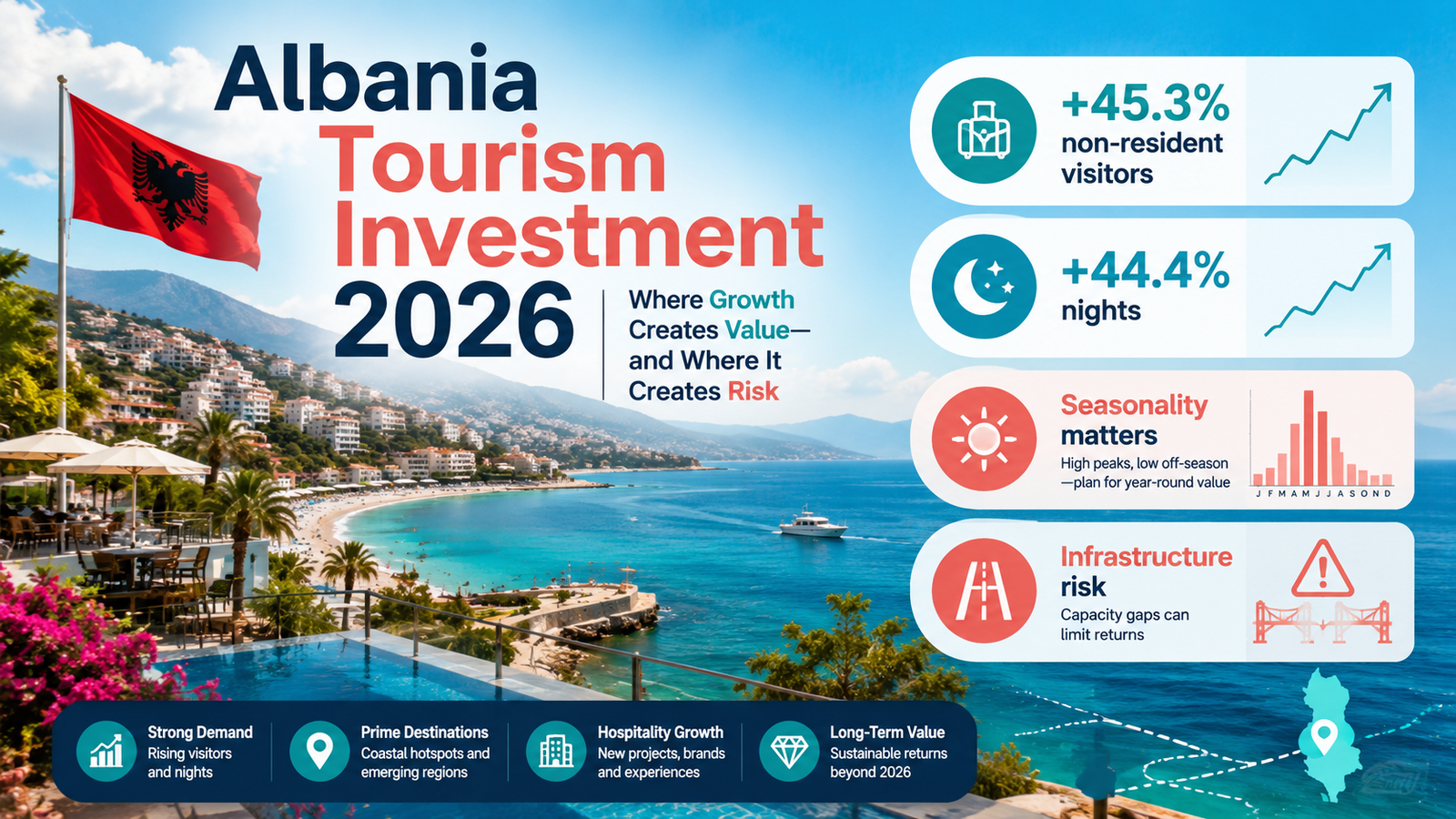
Accommodation data give a more commercial signal. In 2025, registered establishments repeatedly reported strong increases in non-resident visitors and nights. In May, non-resident visitors rose 36.6% and their nights 35.1% year on year. In July, non-resident visitors increased 45.3% and their nights 44.4%. Even December recorded a 47.6% increase in non-resident visitors and 39.2% growth in nights.
The opportunity is therefore broader than summer beach traffic. The challenge is separating durable demand from rapid growth off a lower base.
| Market | Opportunity | Risk to test |
|---|---|---|
| Tirana | Business, city breaks, events, airport traffic and year-round demand | New supply, land cost, traffic and dependence on short stays. |
| Durrës and central coast | Domestic and regional access, ferry traffic, larger resort formats | Product quality, beach pressure, wastewater and undifferentiated supply. |
| Vlora and southern coast | International leisure demand, premium positioning and marina-linked services | Seasonality, access, planning quality and high development expectations. |
| Saranda and Ksamil | High visibility and strong summer demand | Overcrowding, infrastructure load, short season and customer-experience deterioration. |
| Inland and mountain destinations | Culture, nature, food, small hotels and season extension | Lower volume, weaker distribution and limited professional operations. |
The next profitable hotel may not be on the most famous beach
A visible destination attracts investors because demand is easy to see. It also attracts competing rooms, restaurants and apartments. When supply grows faster than infrastructure and service quality, occupancy may remain high for a few weeks while annual returns weaken.
The strongest opportunities may be less obvious: a professionally managed city hotel near a business district, a small coastal property with a longer season, an inland experience hotel connected to food and culture, or serviced accommodation designed for longer stays.
Investors should build a monthly demand model. Annual occupancy hides the difference between a property earning strongly for four months and one producing moderate cash flow throughout the year. Staffing, debt service and maintenance continue after the beach season ends.
Hotel supply must be measured beyond registered hotels
Albania has a large and expanding market of apartments, guesthouses and short-term rentals. A hotel feasibility study that compares only formal hotels understates competitive supply.
Map bookable rooms across major online platforms, new construction, projects under development and informal accommodation. Compare not only price but unit size, parking, kitchen facilities, beach access, cancellation policy and customer ratings.
A branded hotel can command a premium when it offers predictable standards, sales distribution, meeting capacity or resort services. The brand fee is not justified if the local market buys primarily on price and location.
Infrastructure is part of the room rate
A guest does not separate the hotel from the road, beach, airport transfer, electricity, water, waste collection and surrounding public space. Infrastructure weakness reduces the price a property can sustain and increases operating cost.
Due diligence should include water pressure in peak season, wastewater treatment, grid reliability, backup power, road access for coaches, parking, fire-service access and the legal status of beach or waterfront use.
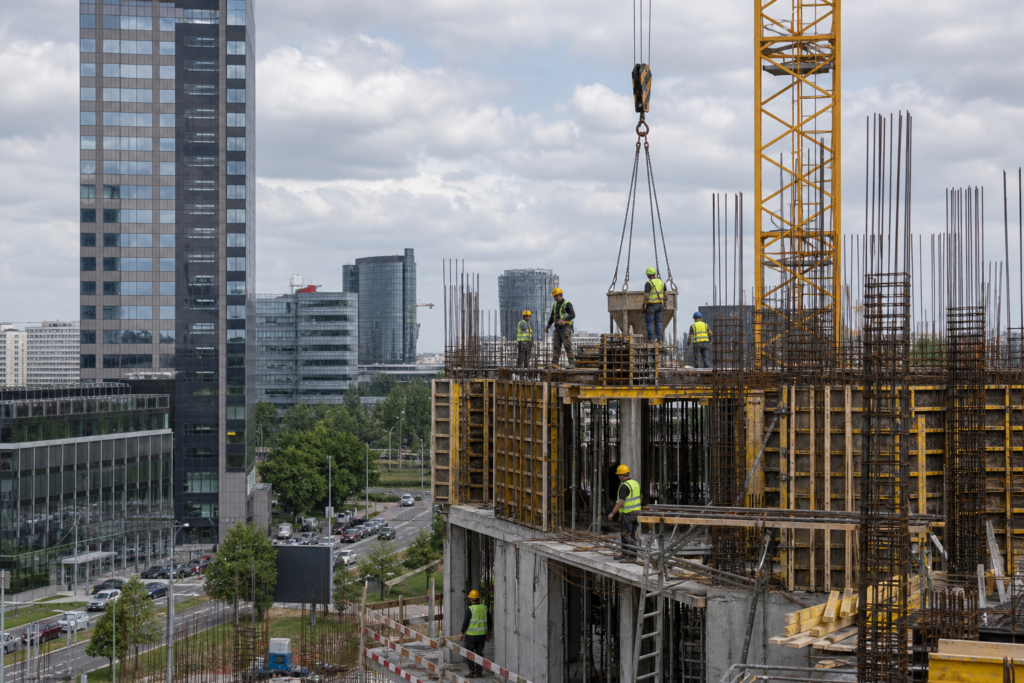
Rapid construction can create a temporary commercial contradiction: more rooms arrive before public infrastructure is ready. Investors should not assume that planned roads or utilities will be completed on the project’s opening date.
The occupancy illusion
A fully booked August does not prove a hotel is profitable. The investment must cover annual payroll, utilities, financing, maintenance and distribution from the cash generated across all twelve months.
Tourism growth creates opportunities outside accommodation
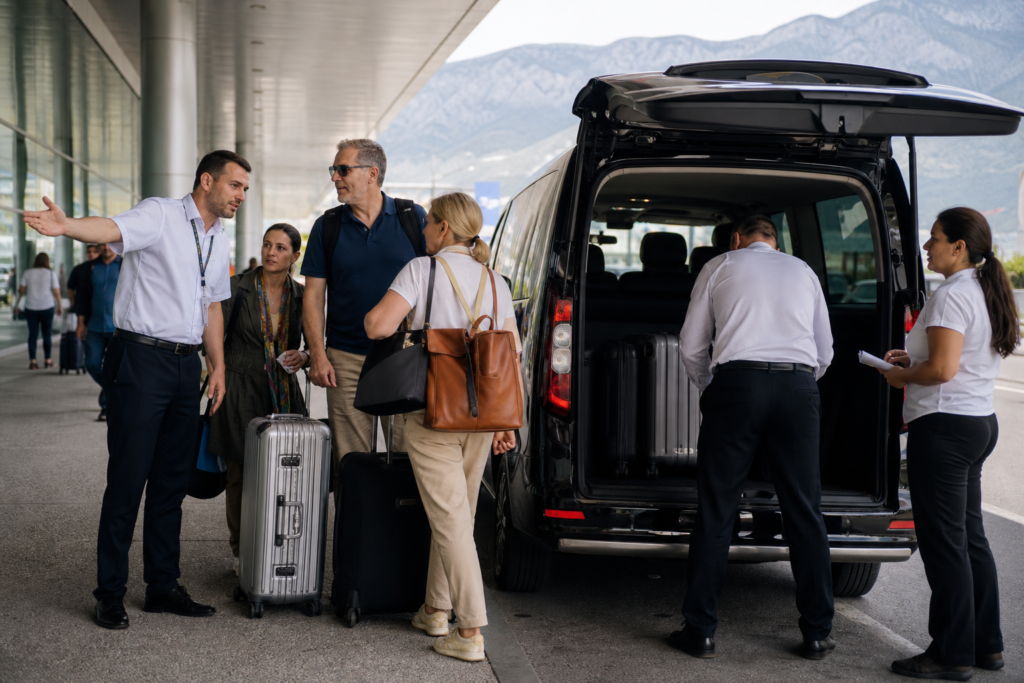
The higher-value opportunity may sit around the hotel rather than inside it. Airport and port transfers, destination management, multilingual tours, event production, food supply, laundry, maintenance, property technology, waste solutions and staff training can scale across many properties.
These businesses often require less capital than hotel development and can build recurring B2B revenue. They also address one of Albania’s central tourism constraints: uneven service consistency during rapid growth.
Food and agriculture offer another connection. Hotels and restaurants need reliable local supply, standard packaging, cold chain and year-round delivery. Investors who organise producers and hospitality buyers can create value without adding another building to the coast.
Year-round demand is the strategic prize
INSTAT’s 2025 data show strong non-resident growth outside the summer peak, including December. That does not mean every destination is becoming year-round. It suggests that city breaks, events, diaspora travel, culture and business demand are widening the calendar.
Tirana has the clearest twelve-month profile. Berat, Gjirokastër, Korçë, Shkodër and mountain areas can develop longer seasons when accommodation is connected to events, food, hiking, heritage and regional routes.
A project should identify the exact demand generator for each shoulder-season month. “More tourism” is not a sales strategy. Conferences, weddings, sports, remote work, cultural festivals and organised tours require different rooms and distribution.
A disciplined hotel-investment test
- Count real competing keys. Include apartments, guesthouses and projects under construction.
- Build a monthly model. Use occupancy, average rate, length of stay and channel cost by season.
- Verify title and planning. Coastal land, access and permits require independent legal review.
- Audit infrastructure. Test water, wastewater, power, road, parking and emergency access at peak load.
- Design the operating model early. Owner-operated, leased, managed and franchised hotels have different risk.
- Recruit before opening. Training and staff accommodation may determine service quality.
- Stress-test supply growth. Model lower rates if competing rooms expand faster than demand.
Where investors should be cautious
Projects should be treated carefully when the land price assumes continuous double-digit visitor growth, when profitability depends on only July and August, or when the business plan ignores short-term rentals.
Large projects also need a realistic exit market. A property may be valuable as an operating hotel but difficult to sell if ownership, management agreements or planning conditions are unclear.
The bottom line
Albania’s tourism economy still offers significant room for professional investment. Demand growth, international visibility and an expanding travel season support hotels, experiences and tourism services.
The next phase will be less forgiving than the first. Value will come from operational quality, infrastructure awareness, season extension and disciplined site selection—not from assuming that every new room will be absorbed because the country is popular.