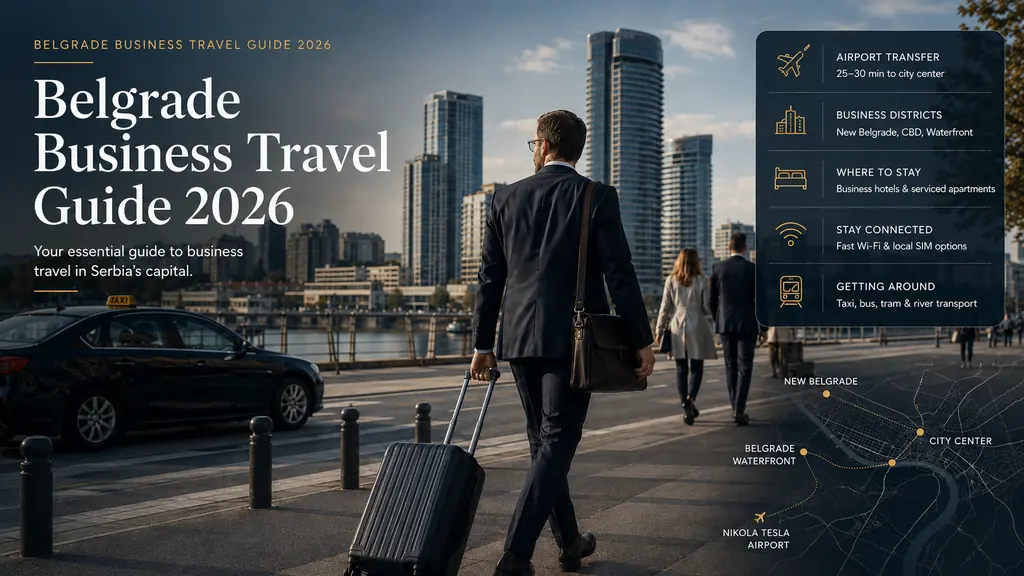
Belgrade is an easy city to enjoy and a city that punishes poor logistics. The centre is compact, but the airport, New Belgrade business district, old-town meeting areas and exhibition venues sit on different sides of the rivers and traffic can turn a short map distance into a late arrival.
Choose accommodation around the meetings that matter most. Belgrade is not a city where every central hotel is equally convenient for every business itinerary.
Why Belgrade matters for regional business travel
Belgrade is the largest business-services and conference centre in the Western Balkans. It combines government institutions, regional company headquarters, international organisations, a strong hotel market and direct air connections.
The city is also preparing for Expo 2027, which is increasing attention on conference capacity, accommodation, transport and international business events. The Tourism Organisation of Belgrade promoted the city’s hotels, Sava Centar, air network and event infrastructure at IMEX Frankfurt in May 2026.
| Area | Best for | Trade-off |
|---|---|---|
| New Belgrade | Corporate headquarters, Sava Centar, larger hotels, airport access and meetings near the business district | Less historic atmosphere; evening plans often require a taxi to the old centre. |
| Stari Grad / Republic Square | Government, professional services, restaurants, cultural programme and walkable central meetings | Traffic, parking and older buildings can complicate logistics. |
| Dorćol | Smaller creative businesses, restaurants, informal meetings and a more local atmosphere | Not the fastest base for airport or New Belgrade appointments. |
| Vračar / Slavija | Embassies, clinics, professional services and access to several parts of the city | Traffic can be slow at peak times and hotel quality varies by street. |
| Waterfront / Savamala | New hotels, riverfront, railway-bus connections and central location | Construction and access patterns can change; verify the exact entrance and pickup point. |
Airport transfers: plan for traffic, not distance
Nikola Tesla Airport is west of the city and relatively close to New Belgrade. A transfer to the old centre can be quick outside peak periods and much slower when bridges and major roads are congested.
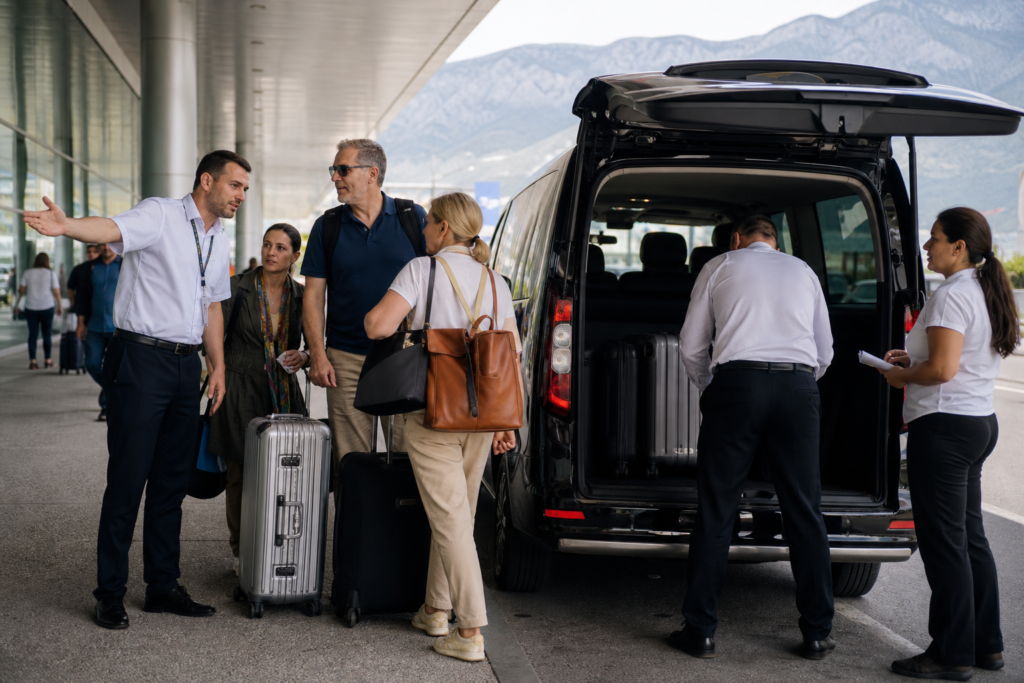
For a first visit or a time-critical meeting, pre-arranged hotel transport or an official taxi arrangement is usually the lowest-risk option. App-based and standard taxis are widely used, but confirm the pickup point and vehicle before entering.
Public bus line 72 connects the airport with the city, while other airport services may suit New Belgrade or central connections. Check current routes before travel because road works and line changes are frequent.
Public transport is free, but not always intuitive for visitors
Belgrade’s city public transport is free of charge. That removes the ticket problem, but it does not remove route complexity. Buses, trams and trolleybuses cover the city extensively, while construction and temporary diversions can change familiar routes.
For simple daytime journeys, public transport can be efficient. For a meeting schedule involving several districts, taxis may still be more predictable. Build a buffer before crossing the Sava or Danube during peak periods.
Where to hold meetings
Hotel lobbies and business hotels work well for first meetings, especially in New Belgrade and around Slavija. They provide predictable seating, Wi‑Fi, parking and easier invoicing.
Coworking and serviced offices are better when privacy, presentation equipment or a full working day is required. Ask about day passes and meeting-room access in advance.
Restaurants are part of Belgrade’s business culture, but lunch can become long and noisy. For negotiation or document review, choose a quieter venue and reserve a table away from live music or large groups.
Sava Centar and major event venues are the natural anchors for conferences and larger delegations. During major events, book accommodation and transport early because demand concentrates quickly.
A local scheduling habit that saves trips
Group meetings by river side and district. A morning in New Belgrade followed by an old-town afternoon is practical. Moving back and forth across the bridges several times is not.
A realistic two-day business itinerary
Day one: schedule corporate and conference meetings in New Belgrade, with lunch near Sava Centar or the business district. Move to the old centre in the late afternoon for a walking meeting, dinner or cultural programme.
Day two: group government, legal, banking and professional-services meetings around Stari Grad, Vračar and Slavija. Leave for the airport with a larger buffer than the map suggests.
If a factory or logistics visit is outside Belgrade, do not combine it with a dense city schedule. Industrial zones, Dobanovci, Pančevo, Novi Sad and other regional locations need realistic road time.
Connectivity, work and practical details
Mobile coverage is strong and many cafés provide usable Wi‑Fi, but confidential work should stay on a secure connection. Cards are widely accepted, while cash remains useful for smaller businesses and incidental expenses.
English is common in hotels, technology companies, international business and younger professional circles. For public administration, technical visits or complex negotiations, a Serbian-speaking colleague or interpreter can make the process faster.
The city’s visitor-information centre is on Knez Mihailova Street. Business travellers attending a fair, conference or Expo-related programme should also check the organiser’s transport and accreditation instructions rather than relying only on general city advice.
Belgrade before Expo 2027
The city is entering an unusually active event cycle. Expo 2027 will run for 93 days and is expected to bring participating countries, contractors, volunteers, media and visitors to Belgrade.
Travel patterns, hotel pricing and meeting availability will tighten before the event itself. Companies planning delegations should identify preferred hotels, transport providers, interpreters and venues well in advance.
The bottom line
Belgrade works well for business when the trip is organised around geography. The city rewards a flexible schedule, local transport knowledge and time for relationship-building.
Choose the right district, leave room for traffic and avoid treating every meeting as a 20-minute transfer. The result is a city that feels connected rather than chaotic.