EUDR 2026 readiness for Western Balkan exporters is primarily a buyer-data and traceability test, not an automatic transfer of EU legal responsibility to every non-EU supplier. For a relevant product imported from Serbia, Bosnia and Herzegovina or another third country, the EU company declaring the shipment for free circulation will generally be the EUDR operator. That company must conduct due diligence and support a due-diligence statement. The upstream commercial consequence is still significant: Western Balkan manufacturers may need to provide shipment-linked evidence covering product scope, source plots, production periods, wood species, legality and material segregation before an EU buyer can qualify their goods.
Updated 24 August 2026. EUDR 2026 readiness now has a clearer operational target. On 13 July the European Commission adopted an Implementing Act for the EUDR Information System and a Delegated Act revising Annex I. The Delegated Act still has to pass European Parliament and Council scrutiny before entering into force; products newly added by that July update are due to become subject from 30 December 2027. For suppliers, this makes version-controlled product classification and shipment-linked data more useful than a one-off claim of being “EUDR compliant.”
What changes in 2026—and which products are exposed
The EU Deforestation Regulation covers cattle, cocoa, coffee, palm oil, rubber, soy and wood, together with specified derived products listed in Annex I. For Western Balkan manufacturing, the most immediate exposure includes relevant timber, wood products, furniture and composite wood products. Agricultural exposure is narrower than a general food-sector obligation: it depends on an Annex I commodity or product and a transaction involving placement on, or export from, the EU market.
A relevant product may be placed on the EU market or exported from it only if it is deforestation-free, produced in accordance with relevant legislation in the country of production and covered by a due-diligence statement, or DDS. Large and medium operators apply the regulation from 30 December 2026. Most micro and small operators apply it from 30 June 2027, while specified timber businesses formerly covered by the EU Timber Regulation apply from 30 December 2026.
Scope must be checked at product level. An item does not become covered merely because a business works with wood, but a finished or composite item cannot be treated as outside scope simply because it is no longer raw timber. Exporters and importers should match each EU-bound stock-keeping unit to its Combined Nomenclature code and the legally applicable Annex I.
On 13 July 2026, the Commission adopted two implementation measures: a Delegated Act updating Annex I and an Implementing Act setting technical rules for the EUDR Information System. The product-scope act remains subject to Parliament and Council scrutiny before entry into force, and newly added products are scheduled to become subject from 30 December 2027. The Information System reopened at the end of June with updated API specifications, with further functionality and company training rolling out through the summer. Exporters should therefore keep the CN/Annex I basis for each SKU under version control and recheck it at shipment date.
Who carries the legal duty—and who supplies the evidence
For a third-country shipment released for free circulation, Commission guidance indicates that the EU-established person declaring the relevant product is generally the operator. The operator collects the required information, assesses risk, mitigates any risk that is not negligible and supports submission of the DDS through the EUDR Information System. Member State competent authorities oversee operators established in their jurisdictions.
A Serbian or Bosnian manufacturer selling to an EU importer is therefore not automatically the statutory operator. The role must be assessed from the transaction structure. The answer may differ where a Balkan company has an EU establishment, takes importer status or uses a representation arrangement that changes how the goods enter the Union. Customs and independent legal advice should be obtained before restructuring a transaction or accepting contractual wording that designates a party as the operator.
| Party | Core EUDR-related function | Decision to confirm |
|---|---|---|
| EU operator | Conducts due diligence and supports or submits the DDS | Specify the evidence and data format required from each supplier |
| Western Balkan supplier | Usually provides product, traceability and legality evidence commercially | Confirm SKU scope and whether each material stream is verifiable |
| Customs declarant or adviser | Supports classification and analysis of the import arrangement | Check CN codes and the entity declaring goods for free circulation |
| Member State competent authority | Supervises operators and may check due diligence and declarations | The operator should identify the authority responsible for its establishment |
This division of roles does not remove the exporter’s commercial exposure. An EU importer cannot support its due diligence merely by recording that the supplier is outside the Union. Its compliance and procurement teams need usable upstream information, and an exporter that cannot provide it may be difficult to retain or requalify even when the underlying commercial relationship is established.
EUDR 2026 readiness starts with the EU-bound SKU
The practical starting point is the EU-bound SKU, not a country-level or company-wide declaration of readiness. Each product should be mapped to a CN code, an Annex I scope conclusion, its relevant components and the route by which it reaches the EU market. The company should retain the basis for its classification and recheck it when the shipment is prepared.
For in-scope products, due diligence follows a defined sequence: collect the information required under Article 9, assess risk under Article 10, mitigate any risk that is not negligible under Article 11 and then submit a DDS through the EUDR Information System. A supplier evidence pack should enable the EU operator to perform those steps; it should not function merely as an archive of invoices and certificates.
Required information includes the geolocation of all plots where the relevant commodities were produced and the production date or time range. For wood, it also includes common and full scientific species names. A workable data architecture therefore connects source-plot, supplier, lot, species and production-period records to the relevant component, finished SKU and export shipment.
Furniture can be harder to qualify than a simple timber product because a composite item may contain wood inputs from several suppliers, species, plots or production periods. Transformation records are needed to preserve the link through sawmilling, panel production and assembly. Segregation also matters where verified material could otherwise be mixed with inputs whose origin cannot be reconstructed.
Commission guidance states that information is required for relevant wood inputs not already covered by due diligence and gives an example in which plywood cannot be placed on the market because the required geolocation is unavailable. This makes missing upstream data a market-access issue, not simply a documentation defect that can always be corrected after dispatch.
Certification may assist evidence collection and risk assessment, but it is not a safe harbour and does not replace the operator’s due diligence. A supplier relying on a certificate without shipment-linked plot, lot, species, production-period and legality records may still leave its EU customer unable to support a DDS.
The commercial divide is traceable versus untraceable supply
The regulation affects an established EU-linked manufacturing base. Germany Trade & Invest reported that Serbian exports of wood products and furniture were approximately €1.2 billion in 2025. GTAI also reported that Germany received about one-fifth of Serbian wood-goods exports and roughly one-third of furniture exports, indicating why requirements from a major EU destination can shape supplier qualification.
The decision-relevant distinction is between traceable and untraceable material. A mapped and segregated supply stream gives an EU operator a stronger basis for assessment than mixed material whose origin cannot be reconstructed. Exporters must decide whether to invest in source-plot mapping, supplier-master data and lot segregation; requalify suppliers; reserve EU production for verifiable inputs; or restrict EU sales to demonstrably out-of-scope products.
No verified regional estimates are available for implementation costs, preparation lead times or possible shipment delays. Budgets should therefore be built from each company’s actual number of EU-bound SKUs, source plots, suppliers, species, components and transformation stages rather than from an unsupported regional average.
Six actions before buyer qualification becomes the bottleneck
- Identify the operator for every route to market. Confirm with the EU customer, customs declarant and independent adviser which entity is the first operator and which party will submit or support the due-diligence statement.
- Run scope analysis at SKU level. Record the CN classification and current Annex I basis for every EU-bound SKU, including out-of-scope conclusions, and recheck the legal text when the shipment is prepared.
- Build a shipment-linked evidence pack. Connect supplier, lot, component, species, source-plot geolocation, production period and applicable legality evidence to the finished SKU and export shipment.
- Segregate verified and unresolved inputs. Prevent mapped material from being mixed with inputs whose origin cannot be reconstructed where that would stop the EU operator from assessing the finished product.
- Fix buyer-data terms and escalation before dispatch. Contracts and questionnaires should define formats, update duties, record access, rejection procedures and escalation to customs, forestry bodies, certification bodies or legal advisers—without inaccurately transferring the statutory operator role.
For EUDR 2026, the strongest readiness signal is not a declaration that a country or exporter is “EUDR-compliant.” It is whether the EU operator can use live, shipment-linked supplier data to complete its risk assessment, undertake mitigation where required and support a defensible DDS by the applicable date. Exporters that can demonstrate that evidence chain have a clearer basis for retaining EU customers. Those that cannot should requalify inputs, revise the product specification or restrict the affected SKU before market access is tested at the importer level.
Sources
- Regulation on Deforestation-free products – Environment
- environment.ec.europa.eu
- Commission updates product scope and tools to support EUDR – Environment
- EU Deforestation Regulation Information System launches – Environment
- Westbalkan bleibt Zentrum für Holzverarbeitung und Möbelindustrie | Branchen | Westbalkan | Holzbearbeitungsmaschinen
- ti-bih.org
- EU trade relations with Western Balkans
- environment.ec.europa.eu
- Due Diligence in Supply Chains: The Case of the EUDR
- Association of Forestry, Wood Processing, Furniture and Paper Industries
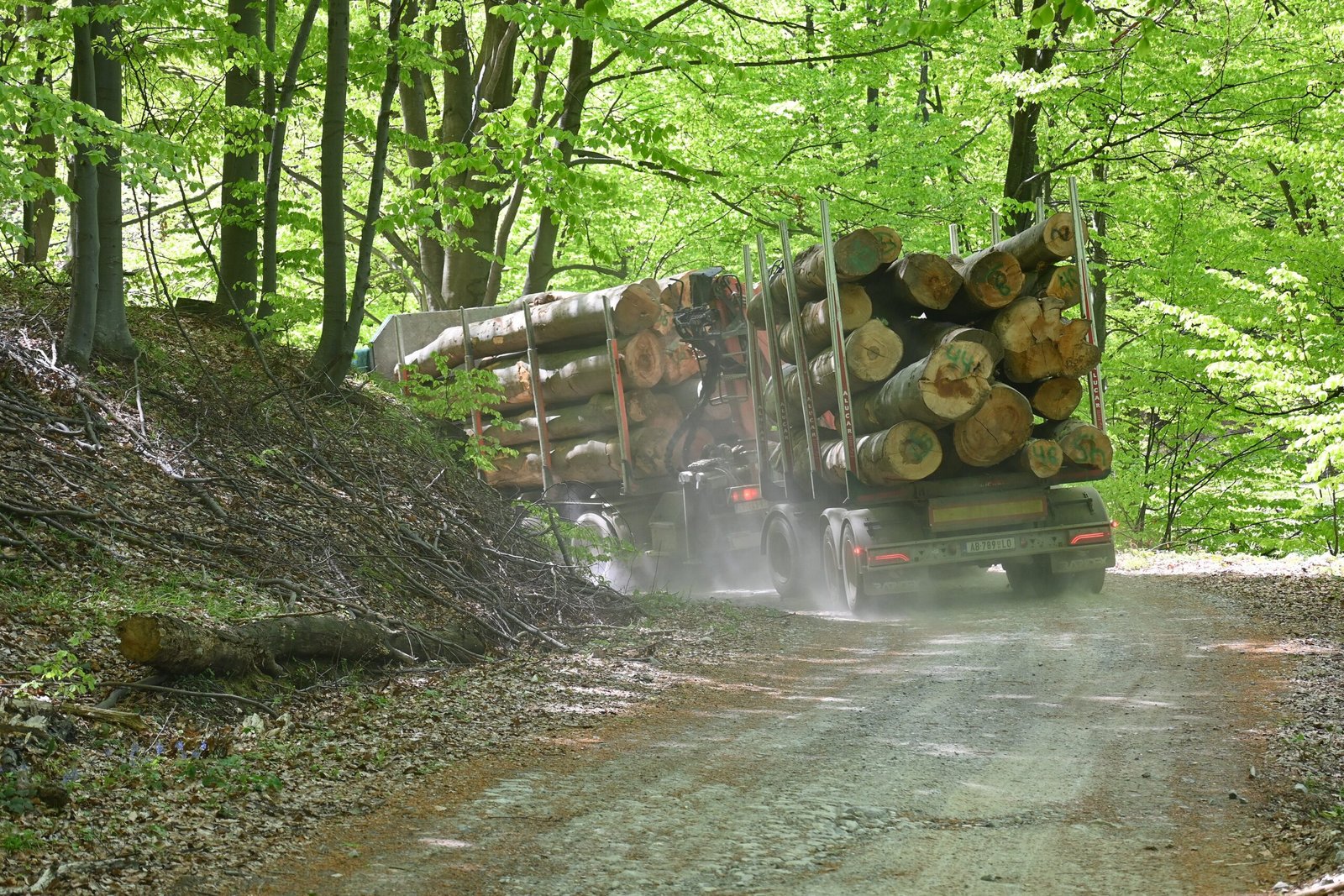
- Featured image: logging truck on Mount Boranja, Western Serbia — Ljiljana Krupanj / Wikimedia Commons, CC BY 4.0, photographed 25 April 2026