Autumn Western Balkans trade fairs in 2026 should be treated as a sequence of different buying environments, not as one regional exhibition circuit. Between 2 September and 31 October, exporters can choose among industrial networking in Zenica, graphics and packaging in Belgrade, interiors and construction in Zagreb and Tirana, wine and food at Wine Vision, a general-business platform in Sarajevo, energy and environmental events in Belgrade, hospitality procurement in Zagreb and industrial technology in Skopje. The right decision depends on sector fit, named target accounts, buyer access, delivery capability and the cost of follow-up—not on visitor claims alone.
This map was refreshed on 17 August 2026 and combines the strongest evidence from two earlier BalkansNetwork drafts into one article. Dates and current participation mechanisms are taken primarily from organisers and venue calendars. Organiser-published audience and exhibitor figures are treated as promotional or planning data unless they refer clearly to completed editions.
Autumn 2026 trade-fair decision map
| Event | 2026 timing and fit | Best default decision |
|---|---|---|
| ZEPS, Zenica | 2–5 September; multisector business fair with an active B2B meeting platform. | Attend with pre-booked B2B meetings if late for stand planning. |
| Grafima + Biro-Expo + Packaging Fair, Belgrade | 16–19 September; graphics, paper, office equipment and packaging run together. | Combine into one targeted trip for print, packaging and related suppliers. |
| Ambienta, Zagreb | 1–4 October; furniture, interiors, sustainable construction, energy systems and smart home. | Exhibit selectively where Croatia or the Adriatic is already a defined sales channel. |
| Tirana Home, Gift & Decoration Expo | 2–4 October; organiser-described B2B/B2C platform for home, construction, smart-home and related categories. | Visit first for Albanian distributor, installer and project-channel screening. |
| Wine Vision by Open Balkan, Belgrade | 10–12 October; wine, spirits and food with exhibitor registration, professional visitors and a dedicated B2B matchmaking system. | Strongest stand case for export-ready producers that can target importers and distributors before arrival. |
| 100 EXPO, Sarajevo | 20–21 October; exhibition, business panels and an advertised B2B app for meetings. | Approve a stand only after buyer-fit review; otherwise use the meeting platform. |
| Energy Fair + EcoFair, Belgrade | 21–23 October; energy, mining, efficiency and environmental solutions run concurrently. | Use one combined visit for energy and environmental counterparties. |
| HoReCa Adria, Zagreb | 22–24 October; B2B hospitality equipment, technology and food-service procurement. | Exhibit when distribution, installation or after-sales support is credible; otherwise book meetings. |
| Energo Tehnoma + Real Expo, Skopje | 29–31 October; technology, energy, electrical, automation, machinery, robotics and real estate. | Prioritise distributor prospecting, technical meetings and market screening. |
Wine Vision now has the clearest B2B architecture
Wine Vision by Open Balkan is scheduled for 10–12 October 2026 at Belgrade Fair. The current platform supports exhibitor registration and professional-visitor registration, while its 2026 B2B system adds product-based search, producer/buyer/distributor registration and structured matchmaking. That makes Wine Vision more actionable than a fair whose buyer access is still described only in broad promotional terms.
The published participation rules also define standard Wine Vision stand models of 4, 12, 24 and 49 m². Associations, chambers, clusters and official representatives can qualify as lead exhibitors under the stated rules, creating a documented route for coordinated participation. A group stand still needs clear responsibility for applications, samples, staffing, importer targeting and post-fair follow-up.
For wine, spirits and premium-food producers, the practical approval test is therefore simple: exhibit only if the portfolio is export-ready, pricing and logistics are prepared and relevant buyers can be identified before the fair. Otherwise, professional-visitor participation and pre-arranged meetings can preserve most of the market-learning value at lower commitment.
Current 2026 evidence strengthens Zagreb, Sarajevo and Skopje
Ambienta 2026 now publishes a reworked format covering more than 3,500 m², more than 200 exhibitors from over 20 countries and an audience above 9,000 visitors. These are organiser-published 2026 scale figures, not independently audited outcomes. The commercially useful detail is the audience composition: architects, designers, investors and developers are explicitly part of the target, which supports a stand only when the exporter can handle specification-led sales and local project delivery.
100 EXPO confirms 20–21 October at Hotel Hills in Sarajevo and explicitly advertises a B2B application for direct meetings. That removes one uncertainty from the earlier draft: a meeting mechanism exists. It still does not prove buyer quality for a particular sector, so companies should inspect the live participant mix before committing stand budget.
HoReCa Adria is scheduled for 22–24 October at Zagreb Fair and publishes a 2026 scale of 350+ exhibitors and brands across 12,000+ m², with 7,800 visitors and 35+ lectures and workshops. Those are organiser figures. For suppliers of hotel, restaurant, catering, wellness or hospitality technology, the fair is commercially stronger where installation, service and distribution can be delivered after the meeting.
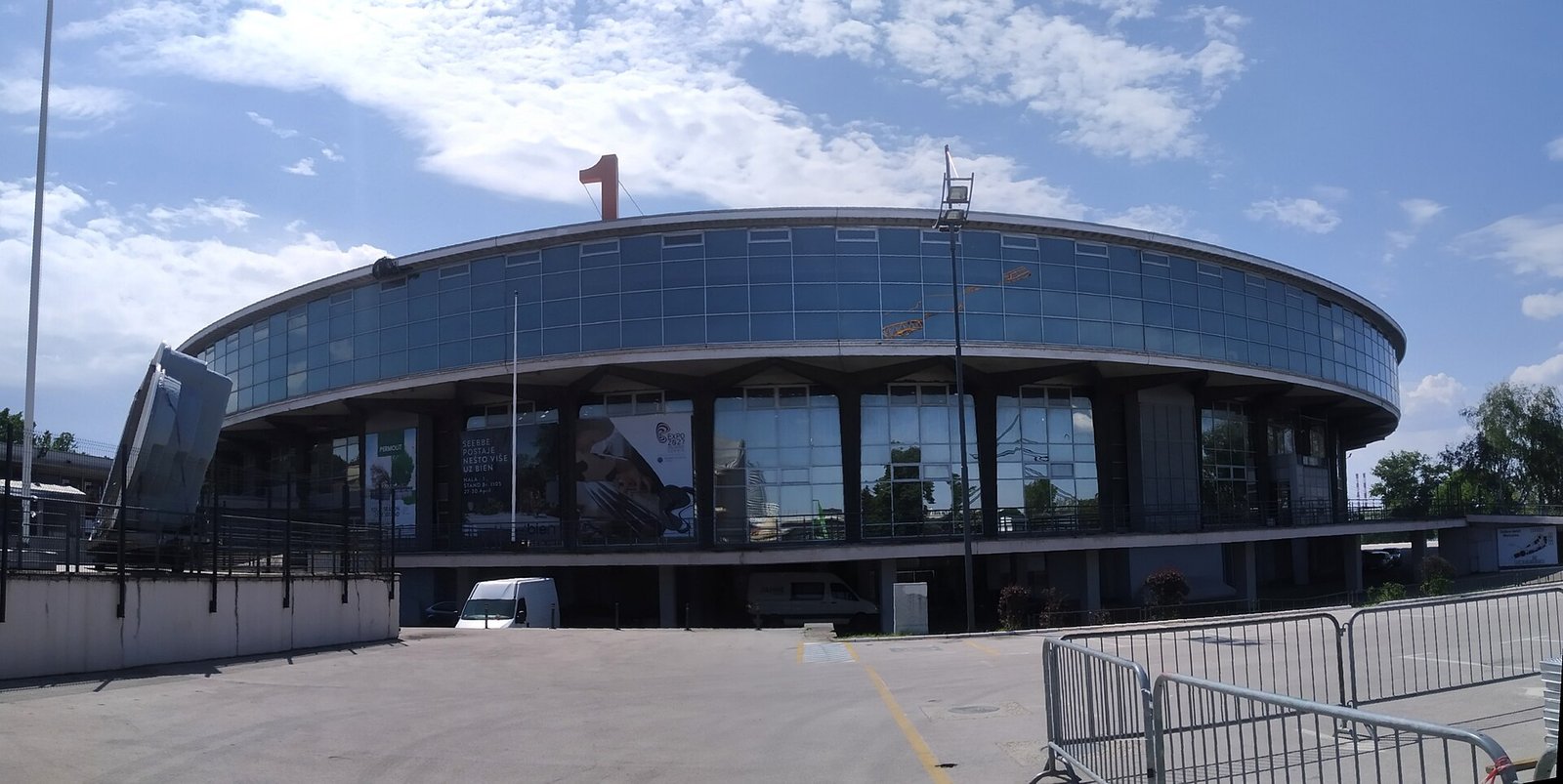
Energo Tehnoma 2026 is scheduled for 29–31 October at Boris Trajkovski Arena in Skopje, concurrently with Real Expo. The organiser states 2,500 m² of exhibition area and a programme spanning energy, electrical and electronics, metal and metallurgy, ICT, automation, machinery, robotics and advanced technology. No current independent buyer total is available, so it is best treated as a technical-meeting and distributor-prospecting platform rather than a guaranteed lead generator.
September is useful for B2B access before the October squeeze
ZEPS 2026 runs from 2 to 5 September in Zenica. Its B2B portal allows companies to create profiles and book meetings, with B2B participation described as free of charge. The foreign-exhibitor form used by the earlier draft set a 2 August deadline and a €170 VAT-inclusive registration/catalogue charge; companies acting after that date should therefore confirm late stand availability rather than assume it, while the B2B route remains the lower-risk option.
Belgrade Fair then groups Grafima, Biro-Expo and the Packaging Fair on 16–19 September. That creates a practical combined trip for packaging, print, office equipment, graphics and production technology. The value is in overlapping account lists and reduced travel duplication; it is not a reason to exhibit in all three simultaneously.
The 20–24 October overlap requires an account-level choice
100 EXPO on 20–21 October, Belgrade Energy Fair and EcoFair on 21–23 October, and HoReCa Adria on 22–24 October overlap across three cities and sectors. A small export team cannot cover them credibly by geography alone. Each event should receive a named account list, meeting objective and owner before travel is approved.
The EcoFair and the Energy Fair are especially suitable for one combined Belgrade itinerary because they run concurrently. HoReCa Adria is a separate procurement ecosystem, while 100 EXPO is broader and should be justified by the live B2B participant pool. Trying to “cover the region” without account-level priorities is likely to produce more conversations but fewer qualified opportunities.
Exhibit, attend or defer: the budget rule
- Exhibit when the buyer route is specific. Wine Vision is the strongest example for export-ready wine, spirits and food; Ambienta can justify a stand for prepared interiors/construction propositions; HoReCa Adria can justify one where regional service and distribution exist.
- Attend with meetings when the fair is broad or timing is late. ZEPS, 100 EXPO, the Belgrade September cluster, Energy/EcoFair and Energo Tehnoma all have stronger cases when a target list precedes travel.
- Use Tirana initially as a channel-screening trip. The organiser describes Tirana Home Expo as B2B/B2C and more than 80 exhibitors, but that does not establish an international buyer programme.
- Defer unsupported stand budgets. The current Montenegro chamber material reviewed for this update promotes organised visits to fairs abroad but does not provide a sufficiently documented domestic autumn 2026 trade-fair proposition comparable with the nine events above.
Before non-refundable expenditure, confirm current dates, stand availability, buyer access, freight instructions, customs requirements and meeting-booking procedures. Cross-border exhibitors should also test delivery assumptions against BalkansNetwork’s Western Balkans road-freight border guide. The commercial test is not whether a fair is large; it is whether the event can put the company in front of named buyers and whether the company can convert those meetings after the show.
BalkansNetwork is independent and is not affiliated with Wine Vision, ZEPS, Belgrade Fair, Zagreb Fair, 100 EXPO, HoReCa Adria, Tirana Home Expo, Energo Tehnoma, EXPO 2027 or the public and business institutions cited.
Sources
- Wine Vision by Open Balkan — 2026 edition
- Wine Vision — 2026 B2B sessions
- Wine Vision / Belgrade Fair — participation rules
- ZEPS 2026
- ZEPS — B2B meetings 2026
- ZEPS — foreign exhibitor form 2026
- Belgrade Fair — 2026 calendar
- Belgrade Fair — EcoFair 2026
- Zagreb Fair — Ambienta 2026
- 100 EXPO Sarajevo 2026
- HoReCa Adria 2026
- Tirana Home, Gift & Decoration Expo 2026
- Energo Tehnoma / Real Expo 2026
- Chamber of Economy of Montenegro — fairs